AI Agent
Autonomous AI agent serves as a decentralized infrastructure for financial applications, focusing on scalable, secure ledgers for multi-asset management, DeFi lending/borrowing, and cross-chain capabilities. Th AI agent enables goal-oriented automation, such as on-chain transactions, smart contract interactions.
Project Overview
Autonomous AI agent serves as a decentralized infrastructure for financial applications, focusing on scalable, secure ledgers for multi-asset management, DeFi lending/borrowing, and cross-chain capabilities. Th AI agent enables goal-oriented automation, such as on-chain transactions, smart contract interactions.
An autonomous AI agent acting as a decentralized infrastructure layer for financial applications: multi-asset management, DeFi lending/borrowing, and cross-chain capabilities. The agent can execute goal-oriented actions such as on-chain transactions and smart contract interactions.
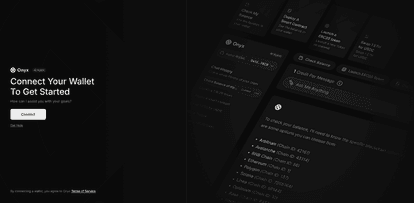
I integrated the Send Agent Kit, Privy for user auth, Turnkey for secure key management, and wired everything into a Nest.js backend with MongoDB. The frontend is a Next.js app surfacing the agent's plans and letting users approve/deny on-chain actions.
Technical Implementation
Architecture
A modular architecture cleanly separating on-chain programs, low-latency data ingestion, and the user-facing app. On-chain code is written in Rust or Solidity with strict test coverage; off-chain services run on Node.js / Rust backends with Redis and PostgreSQL for hot and durable state respectively, containerized for reproducible deploys.
Smart Contracts
Programs are implemented in Rust with the Anchor framework on Solana, or in Solidity on EVM chains, with strict access control, exhaustive error handling, and gas / compute-unit optimization. Every state transition is covered by unit and integration tests before mainnet deployment.
Performance & Reliability
Where the project is performance-sensitive, the hot path is optimized end-to-end: zero-copy parsing, connection pooling, Redis-backed caches, Jito / Nozomi inclusion for Solana, and careful batching for EVM. Monitoring and alerts cover latency, inclusion rate, and PnL so regressions surface immediately.