Four.meme sniper | migration sniper bot
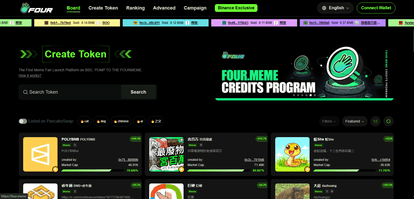
After detecting new tokne mint and check whitelist and buy and sell the token in the same block including rug and risk detection. While detecting new token is migrated from four.meme to PancakeSwap, snipes migrated token.
Project Overview
After detecting new tokne mint and check whitelist and buy and sell the token in the same block including rug and risk detection. While detecting new token is migrated from four.meme to PancakeSwap, snipes migrated token.
A sniper bot for Four.meme on BNB Chain that detects new token mints, checks whitelist status, and buys/sells in the same block while running rug and risk detection. A second mode watches for tokens migrating from Four.meme to PancakeSwap and snipes them on migration.
Implemented in TypeScript/Node.js with Solidity helpers, optimized for mempool speed. The bot maintains low-latency WebSocket connections and uses block-level heuristics to avoid honeypots and rugs.
Technical Implementation
Architecture
A modular architecture cleanly separating on-chain programs, low-latency data ingestion, and the user-facing app. On-chain code is written in Rust or Solidity with strict test coverage; off-chain services run on Node.js / Rust backends with Redis and PostgreSQL for hot and durable state respectively, containerized for reproducible deploys.
Smart Contracts
Programs are implemented in Rust with the Anchor framework on Solana, or in Solidity on EVM chains, with strict access control, exhaustive error handling, and gas / compute-unit optimization. Every state transition is covered by unit and integration tests before mainnet deployment.
Performance & Reliability
Where the project is performance-sensitive, the hot path is optimized end-to-end: zero-copy parsing, connection pooling, Redis-backed caches, Jito / Nozomi inclusion for Solana, and careful batching for EVM. Monitoring and alerts cover latency, inclusion rate, and PnL so regressions surface immediately.